Here is the formal English translation of the text:
**August 2 News (Liu Dingzhou)** — On July 27, JSFT, an optical fiber enterprise with a limited presence in the domestic market, signed a cooperation agreement with the Nantong Haimen Economic and Technological Development Zone. The company will establish a and development and production facility for optical fiber preforms (hereinafter referred to as "preforms") in the zone, with a total investment of $50 million.
According to records, JSFTCL is a subsidiary of STL (Sterlite), a leading Indian optical fiber company. It was established in 2011 as a joint venture with China Tongang, originally named Jiangsu Sterlite Tongguang Optical Fiber Co., Ltd. In 2022, STL (Shanghai) acquired the remaining equity, making JSFTCL a-owned subsidiary of STL. Official news reports state that the project will leverage the company's globally leading preform patent technology and over a decade of localized experience to conduct preform R&D large-scale production.
This development serves as a microcosm of China's latest wave of preform capacity expansion. According to C114, between 201 and 2018, driven by a shortage of preforms and the large-scale construction of fiber-optic broadband and wireless networks, Chinese enterprises initiated a major expansion cycle After a decade of fluctuations, a new expansion cycle has been reignited, this time driven by Artificial Intelligence (AI).
**Preform Capacity Expansion: A Cyclical Return**On August 19, 2015, the Ministry of Commerce issued Announcement No. 25 of 2015, deciding to impose anti-dumping on imported optical fiber preforms originating from Japan and the United States for a two-year period. The duty rates were set at 8.0%–9.1% Japanese companies and 17.4%–41.7% for American companies.
This is the first time our country has imposed anti-dumping duties on optical fiber preforms. According to investigation data, the dumping by optical fiber enterprises has led to a severe underutilization of the preform production capacity of our domestic optical fiber enterprises, with pre-tax profits dropping as low as 2%, serious injury. Following the finalization of this anti-dumping case, accompanied by the large-scale domestic construction of FTTH and 4G, the preform production capacity of optical fiber enterprises has entered a phase of rapid expansion. Among them:
YOFC started the Qianjiang Science and Technology Park project in 2016, which is planned to be in three phases and is expected to become the world's largest preform R&D and production base. Based on this project and the YOFC Wuhan Industrial Park preform projectFC not only meets its own optical fiber drawing needs but also solidifies its position as the world's largest preform supplier.
Hengtong Optic-Electric, relying on proprietary process technology, has carried out systematic technical transformation and upgrading of its existing preform production lines. The new generation of green preforms has been successfully put into production with a steadily increasing. In 2018, it invested 1.349 billion yuan to further the construction of the "New Generation Optical Fiber Preform Capacity Expansion and Transformation Project with an 18-month construction period, adding 800 tons of preform production capacity upon reaching full capacity, thereby joining the ranks of the world's leadingform manufacturers.
In addition, Zhongli Group's Qinghai optical fiber preform project reached a production capacity of 400 tons in 207; Tongding Interconnect's 300-ton optical fiber preform project successfully reached full production in 2017; Futong Group significantly expanded its optical preform capacity in 2017-2018; ZTT officially started construction of its intelligent expansion project for large-size optical fiber preforms in 201; Tefa Information, Xinmao Technology, and Southern Communication respectively cooperated with YOFC and Hengtong Optic-Electric to build optical fiber preform factories in 2018
Reviewing past data reveals that in 2017, every high-performing optical fiber company had mastered the integrated manufacturing capability of "preform-fiber-cable".st the booming market conditions, leading companies like YOFC and Hengtong Optic-Electric performed exceptionally well, while a considerable number of optical fiber and optical cable companies even saw a decline in production sales due to the shortage of optical fiber preforms. Optical fiber companies expanding and building new optical fiber preform capacities is exactly like today, ten years later.
The results of round of optical fiber preform capacity expansion have continued into the 5G era. After 2019, although the concentrated release of optical fiber preform capacity brought a shock the industry, the optical fiber industry maintained high prosperity with the large-scale construction of 5G. After 2024, as 5G construction enters its later and FTTH coverage tends to become complete, the demand for optical fiber gradually declines, stock prices of optical fiber companies languish, and optical fiber prices once dropped to a low of 6 yuan/core-kilometer. Consequently, companies like Futong Group and Zhongli Group fell into difficulties.
It was not until this year that the explosion of AI computing power infrastructure brought brand-new super cycle for optical fiber.
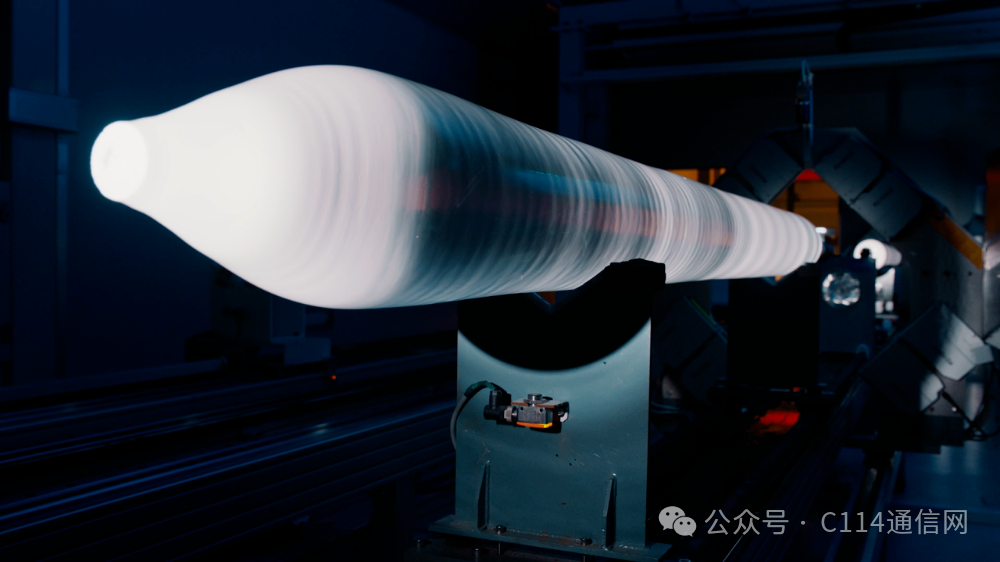
YOFC's independently developed optical fiber preform (file photo)
New cycle, new characteristics: Cross-industry capital entryThe optical fiber industry was originally waiting for 6G, but AI has been an unexpected boon, with a potential market size no less than that of the telecommunications industry. Taking the US, which is the most aggressive in AI infrastructure, as an example, the capital expenditure of internet cloud companies is already far higher than that of telecom operators, and their procurement demand has become core driver of performance growth for optical fiber companies like Corning. Since the beginning of this year, Corning has signed cooperation agreements worth tens of billions of dollars with Meta, Amazon, and NVIDIA Including India's STL, which also benefits from AI infrastructure demand, its latest quarterly performance has hit a historical high.
The newly added demand for AI infrastructure (and fiber drones) has brought about a shortage of optical fiber supply and skyrocketing prices. As the core of the optical fiber industry chain, the optical fiber preform accounts for about 70% of value of the entire chain. Expanding preform production has become an important means for optical fiber companies to enhance market competitiveness and performance. According to data calculations from the Commodity Research Unit (U), China's effective capacity utilization rate for optical fiber preforms will reach 84.3% in 2026, and effective capacity is already approaching full.
Before JSFTCL launched its preform project, many companies had already taken action:
Among established optical fiber manufacturers, YOFC's Qianjiang Industrial Park is advancing a new of 1,100-ton preform capacity expansion, and the project has completed filing; Hengtong Optic-Electric is accelerating the capacity increase of preforms at Inner Mongolia base, launching a Phase II expansion project that will increase capacity by 1.5 times based on Phase I in Inner Mongolia; ZTE Telecom announced in October 202 that the intelligent transformation project for large-size optical fiber preforms has completed its fundraising investment, with 662 million yuan of funds actually used; Tongding Interconnect announced May this year its plan to invest about 800 million yuan to build a project with an annual production of 600 tons of optical fiber preforms and 2 million core-kilometers of optical fiber; FiberHome announced in July its acquisition of the remaining equity in a preform joint venture for 500 million yuan, and plans to raise 2913 billion yuan through a private placement to invest in projects such as the industrialization of ultra-large-scale optical fiber preforms; Hangdian Co., Ltd. in July its plan to raise no more than 2.88 billion yuan through a private placement, of which 1.381 billion yuan will be used to build super factory project related to an annual production of 1,200 tons of preforms...
Unlike the previous expansion cycle, this round has seen a significant influx of cross-industry capital. These include, but are not limited to:Hesheng Silicon announced in June that its planned project for an annual production of 3,200 tons of optical fiber preforms has completed the filing and approval process, relying on self-developed high-purity silicon raw materials to extend downstream into preform manufacturing; Han's Laser announced in June its intention to invest 2.52 billion yuan to project with an annual production of 60 million core-kilometers of optical fiber and optical rods, including 2,000 tons of optical rods; Lingyi i announced in July (recently terminated) its plan to acquire optical rod and optical fiber-related assets of Futong Jiashan under Futong Group for no more than 4 billion...
The price of optical fiber has increased fourfold within a year and remains in short supply. Investing in the construction of optical rods, whether for external sales or optical fiber drawing appears to be a profitable business. Zhang Jianfeng, President of Hengtong Optic-Electric, stated in a previous interview, "Whoever owns the optical rod production capacity holds the initiative in." Furthermore, optical fiber is strongly tied to the AI concept, which also holds great value for listed companies' performance in the capital market. Therefore, it is reasonable that crossindustry capital continues to enter this round of optical rod expansion cycle.
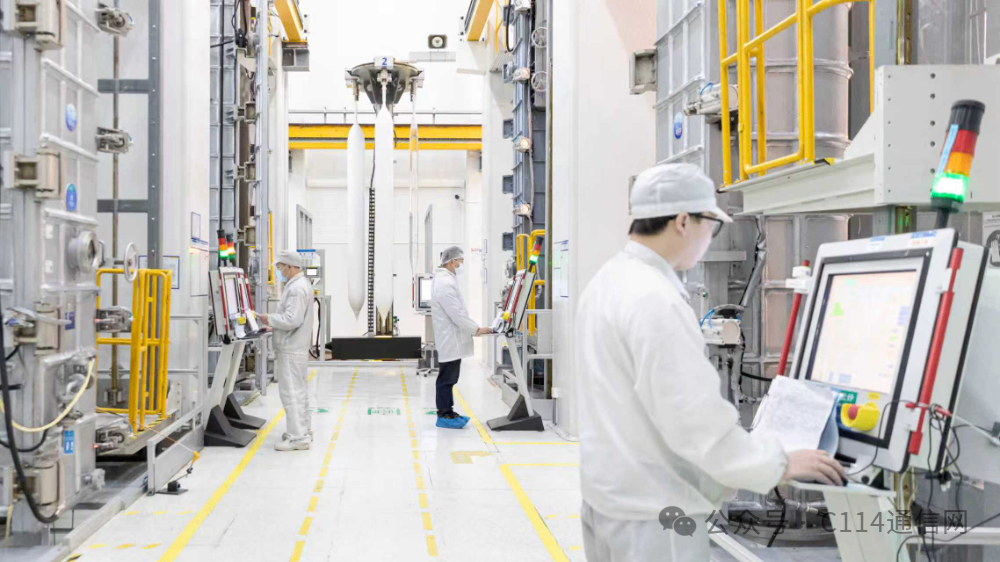
Hengtong Optic-Electric optical fiber production workshop (file photo)
This is not a bad thing. On one hand, it that AI infrastructure is a real demand, breaking the "ceiling" of the optical fiber industry and creating a brand-new blue ocean market; on the other hand, the industry has "fresh water," promoting market competition and rebalancing supply and demand, which plays a positive role in the healthy development of AI infrastructure and the telecommunications industry. It can be expected that optical fiber industry will attract more capital to enter.
New AI cycle: Can it resolve the capacity mismatch?
Looking back at history, the optical fiber industry is strongly correlated with telecommunications and exhibits obvious cyclical characteristics. Optical fiber capacity continuously rotates between capacity shortage - capacity oversupply - capacity shortage, and optical fiber companies also swing back and forth between surging profits - sluggish - surging profits again. Relying on a strong domestic market and strategic decisions to promote internationalization, along with the overall upward development trend of the industry, China's optical companies have grown into a major global pole.
This has made China's optical fiber companies the main beneficiaries after the explosion of demand for AI infrastructure. The latest 2026 semiannual earnings forecasts show that multiple optical fiber companies have achieved significant profit growth, especially YOFC, which is expected to have a net profit of about 2.4 billion to 3 yuan in the first half of the year, a year-on-year increase of 711% to 914%. Zhuang Dan, Executive Director and President of YO, pointed out in public that the optical fiber and cable industry has experienced three growth periods: the first was from 1993 to 2008, driven bycommunications infrastructure construction; the second was from 2009 to 2024, driven by the upgrade and iteration of 4G, 5G, andTTx in the telecommunications industry. The third is from 2025 to 2040, driven by AI as well as 6G and FTTG ( to the GPU). "The AI wave is driving the optical fiber and cable industry into an ultra-long prosperity cycle."
Can the new AI-driven cycle break free from the traditional cycle characteristics based on telecom investment? This can be viewed from two levels. The first is the capacity mismatch between optical preforms and optical fibers. Expanding the capacity of optical fiber drawing equipment is relatively simple, generally requiring only 6 to 12 months to complete; however, optical preform production lines have high technical barriers and complex processes, requiring 18 to 24 months to go into production. When companies urgently need optical fiber, they actively or passively expand preform production. But by the time the preform capacity is realized, the industry enters a downturn due to slowing telecom investment, leading to insufficient operating rates and impairments, which is counterproductive.
On another level, in the new AI cycle, the demand for AI infrastructure is extremely strong, even squeezing the demand from the telecom and vertical industries which is the core factor behind the surge in ordinary optical fiber prices this year. Currently, optical fiber companies are expanding preform capacity, which seems capable of matching market demand in the coming, especially since the commercialization of 6G is not far off.

Image generated by AI.
The problem still exists: First, the long-term demand for AI infrastructure is uncertain. Nvidia's $250 support for OpenAI has triggered industry anxiety over "circular financing" and the eventual bursting of the AI bubble; second, the market is often irrational, and the fiber optic industry lacks insurmountable barriers, which may lead to the entry of some "inefficient capacity"; finally, fiber optic prices are currently at a high level, a result of multiple resonating factors, and future sustainability is questionable. For example, if Russia and Ukraine reach a peace agreement this year and orders for fiber optic drones shrink, will global fiber optic prices remain firm?
What be clearly stated is that the shortage of fiber optics will not change; the medium-term market space for fiber optics has already opened up; and in the long term, "all- interconnection" can still spark imagination. The rest is up to the market. Fiber optic companies with an integrated rod-to-cable industry chain, strong innovation capabilities, and a global layout will still be winners in this new AI cycle.











 Record Number:鲁ICP备2022038891号-2